
Gardening for beginners is at the heart of every story we share on Nottingham in bloom, connecting local people with practical, planet‑friendly ways to grow. This homepage guide introduces you to simple, modern methods that work in real city gardens, courtyards and balconies. You will learn how to plan, plant and care for your first beds with confidence. Every tip is tailored to Nottingham’s climate and community projects so you can grow alongside your neighbours.
Why gardening for beginners matters in a changing city
New growers in Nottingham are shaping cleaner, cooler and more resilient streets, and gardening for beginners is the easiest entry point. Small gardens capture carbon, support pollinators and reduce flooding after heavy rain. On this page, we show how first‑time gardeners can improve their wellbeing while supporting local climate goals and neighbourhood pride.
Health and wellbeing benefits you can feel
Regular time in the garden lowers stress, improves sleep and boosts vitamin D levels, even in a small yard. Studies across the UK show that beginners who garden at least twice a week report higher happiness scores. Simple tasks like watering, pruning and sowing seeds count as light exercise. When you start with structured advice, gardening for beginners becomes a sustainable, mood‑lifting habit.
Environmental impact at street level
Urban gardens cool hard surfaces, capture fine dust and provide food for bees, butterflies and birds. A single square metre of mixed planting can intercept up to 60 litres of stormwater during heavy rain. By following clear, seasonal steps, gardening for beginners supports Nottingham’s wider climate resilience strategy. Your window box or raised bed becomes part of a living green network across the city.
Building stronger, greener communities
Shared planting days, seed swaps and local compost schemes bring neighbours together. Many Nottingham streets now run informal “front garden clubs” to help residents learn basic techniques. With accessible guides to gardening for beginners, these groups can coordinate planting themes, colour schemes and wildlife corridors. The result is safer‑feeling streets, higher civic pride and more opportunities for intergenerational learning.
Core gardening for beginners skills to master first
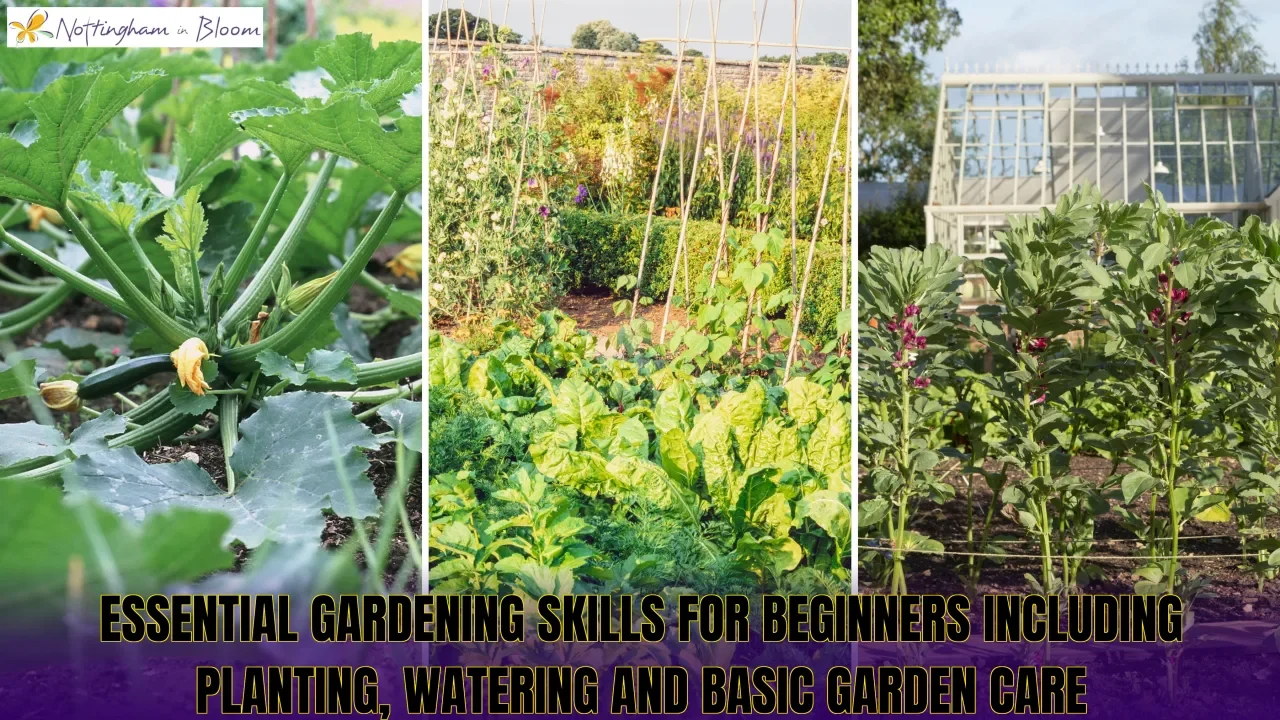
Before you buy plants or tools, it helps to understand a few foundation skills that make every garden easier to manage. This section breaks down soil, light, water and plant choice into simple steps. With these basics, gardening for beginners becomes far less risky and much more rewarding from the very first season.
Understanding your space and soil
Start by mapping where the sun falls in the morning, midday and evening across your plot or balcony. Check whether your soil is sandy, loamy or clay‑heavy by squeezing a moist handful and seeing how it holds shape. In most Nottingham postcodes, slightly clay soils benefit from added compost or well‑rotted manure each spring. When gardening for beginners, improving soil quality is the single most powerful step you can take.
Choosing resilient plants for Nottingham’s climate
Nottingham’s temperate climate suits hardy perennials, cool‑season vegetables and many herbs. New growers should favour disease‑resistant varieties that cope with occasional frost and summer dry spells. Look for UK‑grown plants labelled RHS Award of Garden Merit for extra reliability. This evidence‑based approach to gardening for beginners reduces plant losses and saves money in the first crucial year.
Watering, feeding and simple care routines
Most garden plants prefer a deep soak once or twice a week rather than a light sprinkle every day. Use collected rainwater where possible to reduce bills and protect treated mains supplies. Apply a slow‑release organic fertiliser in early spring, then top up with liquid feeds for hungry crops like tomatoes. When you build these habits into your weekly schedule, gardening for beginners fits smoothly around work and family life.
Seasonal gardening for beginners calendar for Nottingham
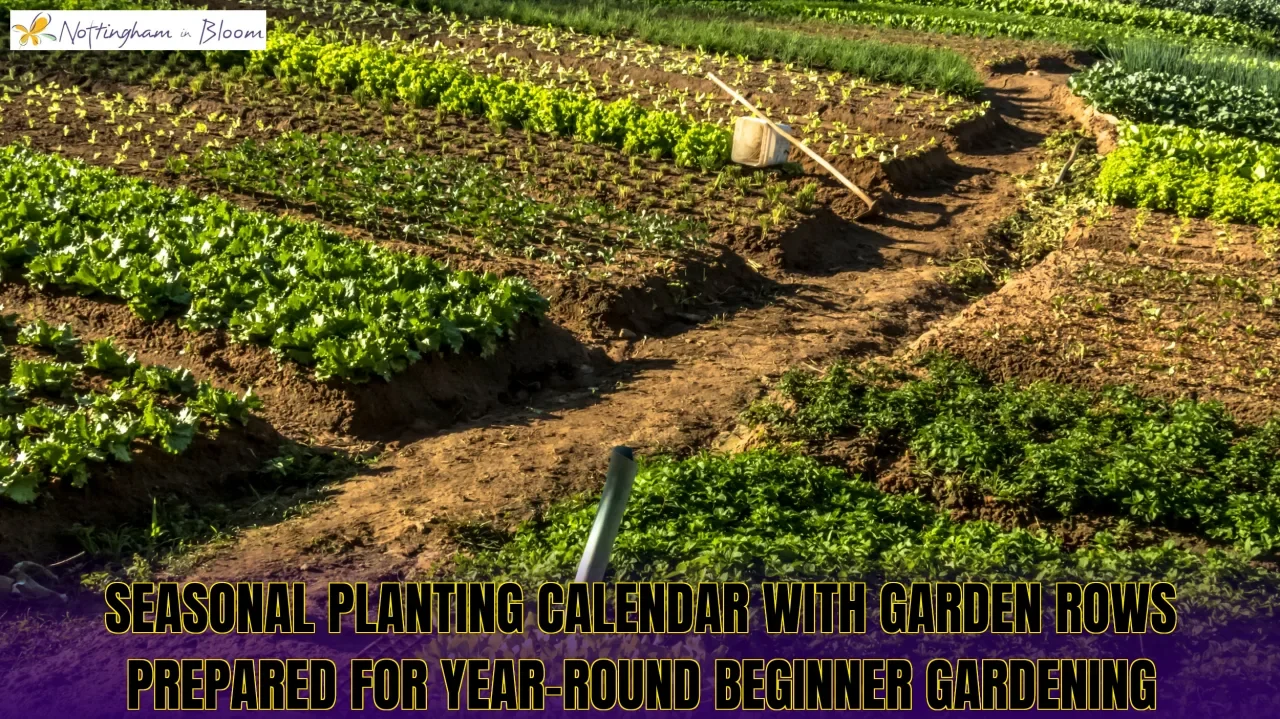
Timing is critical in a temperate city, so we provide a clear, month‑by‑month overview. This seasonal calendar helps you sow, plant and harvest at the right moment, even in a compact space. With a structured plan, gardening for beginners turns into a predictable cycle instead of guesswork and disappointment.
| Season | Key tasks | Ideal crops and plants | Time needed per week |
|---|---|---|---|
| Early spring (Feb–Mar) | Prepare beds, start seeds indoors, prune shrubs | Salad leaves, peas, sweet peas, hardy herbs | 1–2 hours |
| Late spring (Apr–May) | Plant out seedlings, mulch, install water butts | Potatoes, beetroot, calendula, wildlife‑friendly perennials | 2–3 hours |
| Summer (Jun–Aug) | Water deeply, stake plants, harvest regularly | Tomatoes, beans, courgettes, nectar‑rich flowers | 3 hours |
| Autumn–winter (Sep–Jan) | Plant bulbs, add compost, protect tender plants | Spring bulbs, kale, garlic, evergreen structure | 1 hour |
Planning your first spring
Use late winter to clear debris, test your soil and sketch a simple planting plan. Focus on fast‑growing crops and hardy flowers that forgive small mistakes. Many community gardens linked with Nottingham in bloom host early‑spring workshops for new residents. Attending one event can transform gardening for beginners from theory into hands‑on confidence.
Keeping momentum through summer
As growth accelerates, consistency becomes more important than perfection. Check moisture levels by pushing a finger into the soil before watering, and adjust for heatwaves or heavy rain. Join local online groups to share surplus harvests and ask quick questions. This social support helps people practising gardening for beginners stay motivated during busy summer weeks.
Preparing for the next year in autumn
After the main harvest, remove diseased material and add a 5–8 cm layer of compost to exposed soil. Plant bulbs in groups of odd numbers for a natural look the following spring. Many Nottingham households now sow green manures to protect bare beds from erosion. These simple autumn tasks make gardening for beginners easier and more productive when the new season starts.
Local support and Nottingham in bloom initiatives
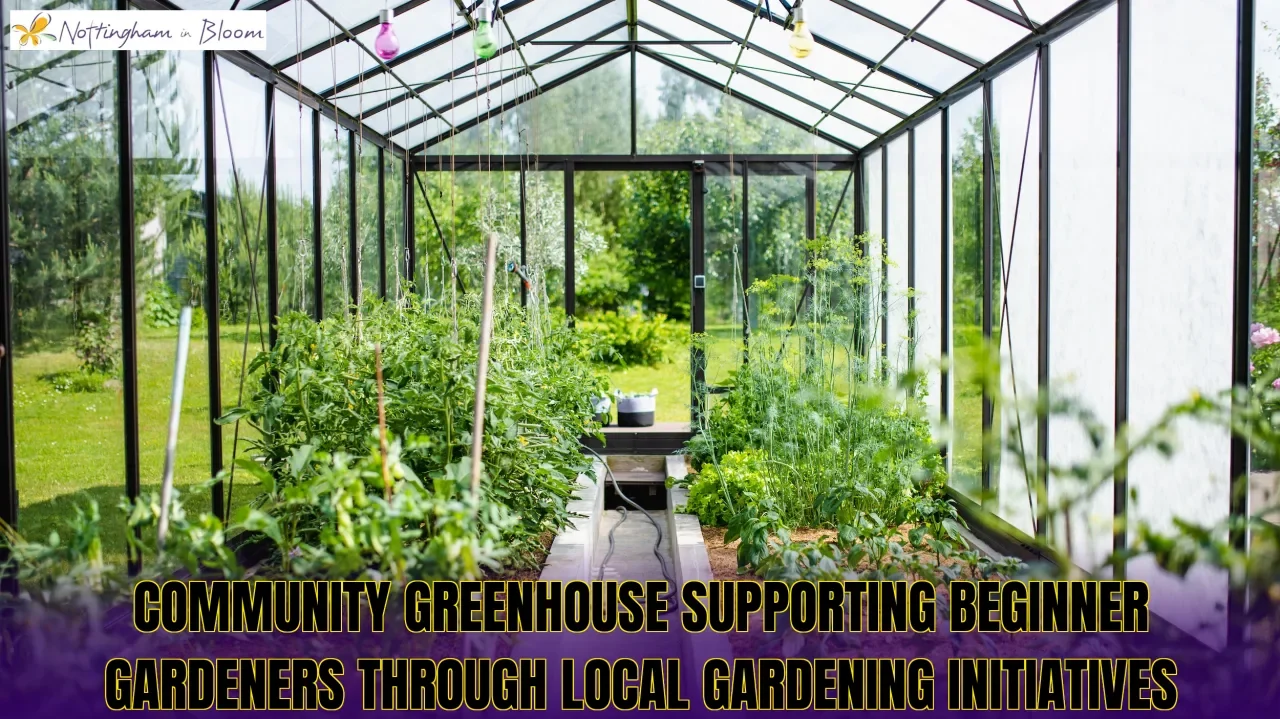
Across the city, volunteers, schools and businesses collaborate to turn grey corners into thriving habitats. New gardeners can tap into this network for training, tools and inspiration. By combining local projects with online advice, gardening for beginners becomes a shared journey rather than a solo experiment.
Community gardens and training hubs
Neighbourhood plots in areas like Sneinton, Bulwell and The Meadows offer starter beds, tool libraries and mentoring. Many of these sites partner with Nottingham in bloom to run free or low‑cost introduction sessions. You can learn composting, seed sowing and wildlife‑friendly design in a single morning. These hubs are ideal for residents who want structured, practical gardening for beginners support.
Schools, youth groups and family projects
Primary and secondary schools increasingly use food‑growing spaces to teach science and nutrition. Parents can mirror these lessons at home with small raised beds or container gardens. Resources developed with Nottingham in bloom help families choose safe tools and age‑appropriate tasks. This approach turns gardening for beginners into a shared family activity that builds skills across generations.
Grants, competitions and street‑level campaigns
Local councils and partners sometimes offer micro‑grants for planters, compost bins or rainwater systems. Annual street competitions, supported by Nottingham in bloom, reward creative planting and wildlife value. Residents can start with simple window boxes or doorstep pots and still take part. These incentives give people practising gardening for beginners a clear goal and a reason to keep improving their spaces.
Conclusion
Gardening for beginners in Nottingham is more than a hobby; it is a practical way to improve your health, your street and your city’s resilience. With seasonal guidance, local community support and evidence‑based tips, anyone can turn a balcony, yard or shared plot into a thriving green space. Explore the latest campaigns, how‑to guides and local events on Nottingham in bloom to plan your next steps.
Discover our spring gardening checklist to get your plot ready.