
Spring gardening checklist is the perfect way to reset your outdoor space after winter and prepare for a vibrant growing season. At Nottingham in bloom, we combine local environmental priorities with practical, science‑based gardening advice. This homepage guide gives you a clear, manageable plan that suits busy urban lifestyles and changing UK weather. Follow it step by step to create a resilient, wildlife‑friendly garden that looks good from March through May.
Why a spring gardening checklist matters for every plot
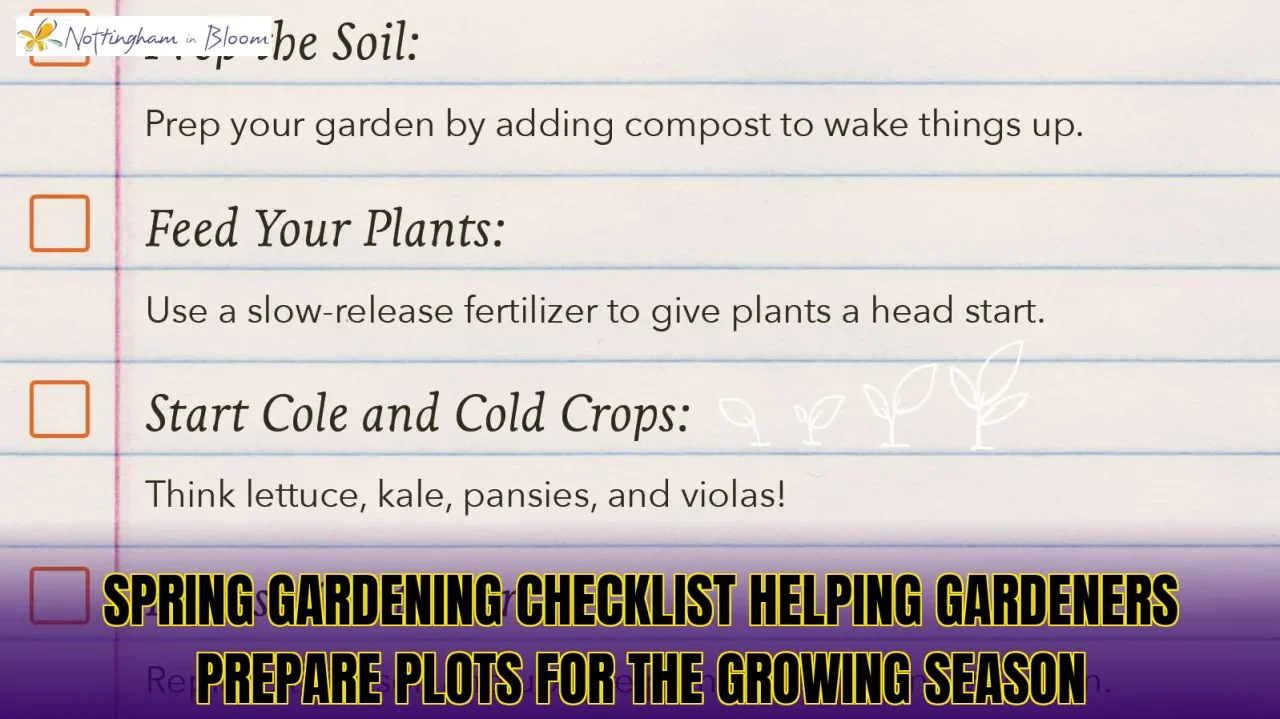
A structured spring gardening checklist helps you use limited time, space, and resources more effectively. Instead of reacting to problems, you work proactively with soil temperature, day length, and rainfall patterns. Nottingham in bloom encourages residents to treat gardens as mini green infrastructure, supporting pollinators, cooling streets, and absorbing stormwater. With that mindset, even a small courtyard or balcony can contribute to local biodiversity and climate resilience.
Understanding your garden’s microclimate
Before you tick off tasks on any spring gardening checklist, map the sun, shade, and wind patterns around your property. South‑facing walls create warm pockets ideal for early salad leaves and herbs, while low, damp corners suit ferns or hostas. Note frost pockets where cold air settles overnight, as tender plants and early blossom need extra protection. This quick audit ensures you match the right plant to the right place and waste less water and compost.
Planning for biodiversity and local wildlife
An effective spring gardening checklist goes beyond flowers and vegetables to include habitat features. Aim to have nectar available from early spring bulbs through to late autumn perennials, so bees and hoverflies always find forage. Leave some hollow stems and leaf litter until mid‑spring to protect overwintering insects and amphibians. If space allows, a small log pile or shallow water dish will dramatically increase garden wildlife in just one season.
Setting realistic goals for the season
Many gardeners abandon their spring gardening checklist because it feels overwhelming by April. Break your ambitions into three categories: quick wins, medium projects, and long‑term improvements. Quick wins might be weeding the front border, sowing salad, or refreshing containers near the door. Larger projects, such as building raised beds or installing a water butt, can be phased across several weekends to stay achievable.
Core spring gardening checklist tasks for healthy soil
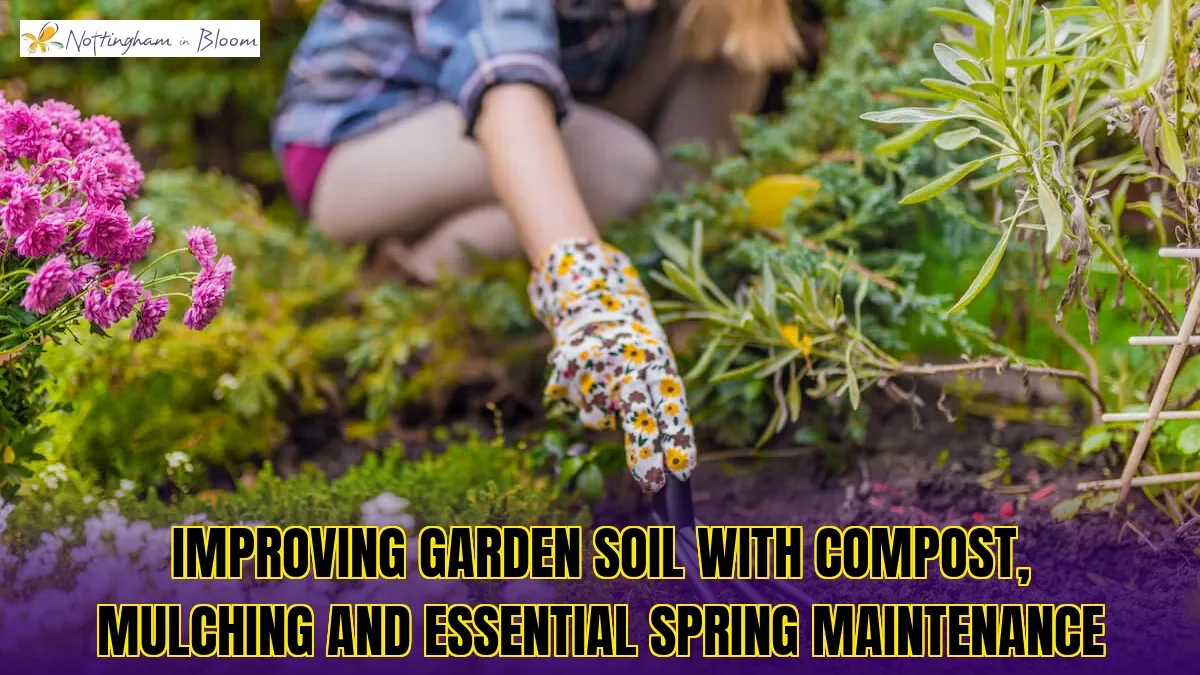
Healthy soil is the foundation of every spring gardening checklist, because it drives root development, drainage, and nutrient cycling. After a wet UK winter, compaction and nutrient leaching are common, especially on heavy clay. Nottingham in bloom recommends a light‑touch, regenerative approach that protects soil structure and micro‑organisms. Focus on gentle preparation, organic amendments, and minimal digging rather than aggressive cultivation.
Assessing soil condition and structure
Start by checking texture, drainage, and pH in several beds or containers. Squeeze a handful of moist soil: if it forms a hard ball, you likely have heavy clay that needs organic matter. If it falls apart like dust, add compost to improve water retention and fertility. Simple home pH kits help you decide where to grow acid‑loving plants, such as blueberries, and where to prioritise lime‑tolerant species.
Adding organic matter and mulches
Every robust spring gardening checklist includes adding well‑rotted compost, leaf mould, or manure. Spread a 3–5 cm layer over beds and allow worms and rainfall to pull it down, avoiding deep digging that disrupts soil life. Around shrubs and perennials, top up organic mulch to suppress weeds and stabilise moisture. Keep material a few centimetres away from stems to reduce rotting and slug hiding spots.
Planning crop rotation and bed layout
If you grow fruit and vegetables, integrate crop rotation into your spring gardening checklist to limit pests and diseases. Avoid planting brassicas, such as cabbage and kale, in the same bed two years running to reduce clubroot risk. Group thirsty crops near water sources and keep tall plants where they will not shade sun‑loving varieties. Sketching a simple bed map now saves confusion when seedlings are ready to plant out.
| Task | Best timing | Notes |
|---|---|---|
| Soil testing (pH, structure) | Late Feb – early Mar | Test several spots, including veg beds and borders |
| Compost and manure application | Mar – mid Apr | Use well‑rotted only; avoid fresh manure on crops |
| Mulching around perennials | Mar – May | Apply after rain, 3–5 cm deep, not touching stems |
| Bed layout and rotation planning | Any time in Mar | Keep simple map for next year’s reference |
Spring gardening checklist for planting, pruning and wildlife
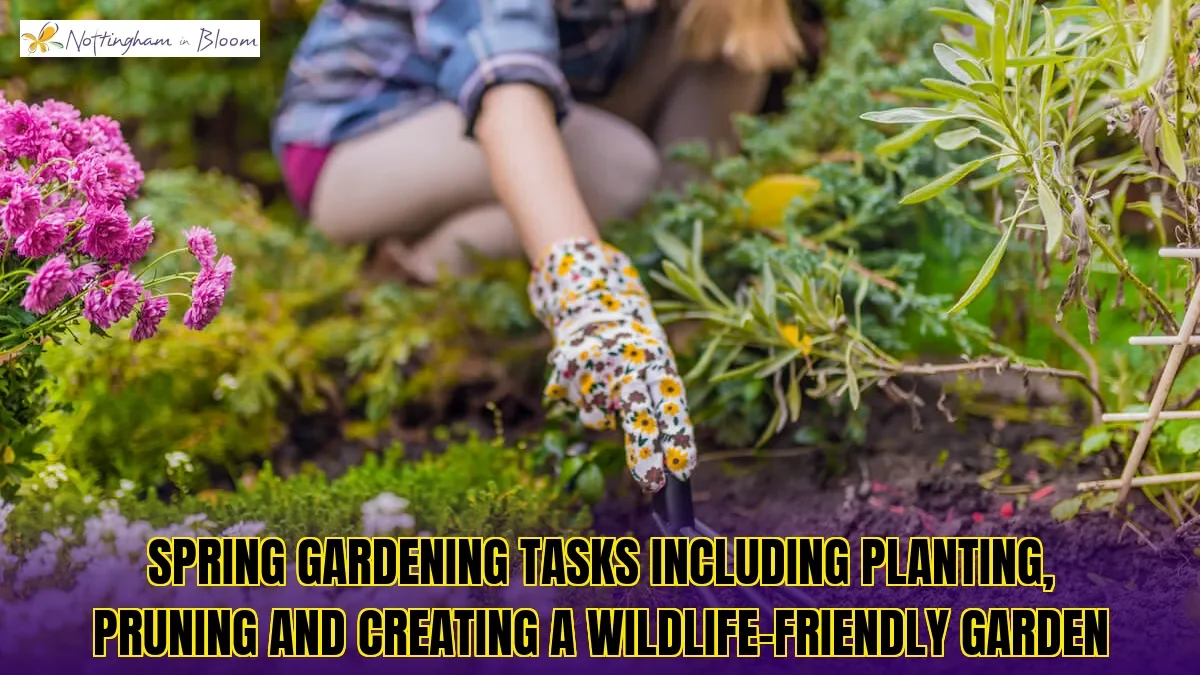
This part of your spring gardening checklist focuses on visible changes: new plants, careful pruning, and wildlife‑friendly tweaks. Timings shift slightly with each spring, so watch local frost dates and soil warmth as well as the calendar. Nottingham in bloom encourages mixing ornamental and edible plants to maximise colour, yield, and ecological value. Even small interventions, such as delaying the first lawn cut, can support pollinators emerging from winter.
Early sowing and seasonal planting
Use your spring gardening checklist to stagger sowing so you avoid gluts and gaps. Start hardy crops like broad beans, peas, and spinach under cover in late winter, then plant out once frosts ease. In April and May, sow half a row of salad every two weeks for a continuous harvest. For containers, choose peat‑free compost and combine herbs, trailing flowers, and dwarf vegetables to make the most of limited space.
Pruning, deadheading and structural care
Pruning tasks on a spring gardening checklist depend on plant type and flowering time. Cut back late‑flowering shrubs, such as buddleia, in early spring to encourage strong new growth and better blooms. Remove dead, damaged, or crossing branches from fruit trees on a dry day to reduce infection risk. Refresh supports, ties, and trellises now so they are ready for climbers and heavy crops later in the season.
Creating habitats and reducing chemical use
A modern spring gardening checklist should always include steps to cut pesticides and support natural predators. Encourage ladybirds and lacewings by planting diverse flowers and avoiding broad‑spectrum sprays, especially at dusk. Leave a small “wild” patch where dandelions and native grasses can flower for early pollinators. Nottingham in bloom champions integrated pest management, combining physical barriers, hand‑picking, and resilient planting rather than relying on chemicals.
Conclusion
A well‑planned spring gardening checklist turns good intentions into practical weekly steps that fit real lives and real weather. By focusing on soil health, thoughtful planting, and wildlife support, you help your garden and neighbourhood thrive together. Nottingham in bloom is here to guide you with local insights, seasonal reminders, and evidence‑based tips. Explore the full site to stay inspired from early buds to late autumn colour.
Discover how to keep your plot thriving with summer garden maintenance.