
Summer garden maintenance is at the heart of how Nottingham in bloom supports residents, schools and community groups across the city. When temperatures rise, lawns, borders and containers face real stress, but a few focused routines can keep everything thriving. This homepage guide brings together practical, climate‑smart tips you can apply right away, whether you care for a balcony, courtyard, or shared green space.
Planning summer garden maintenance for changing weather
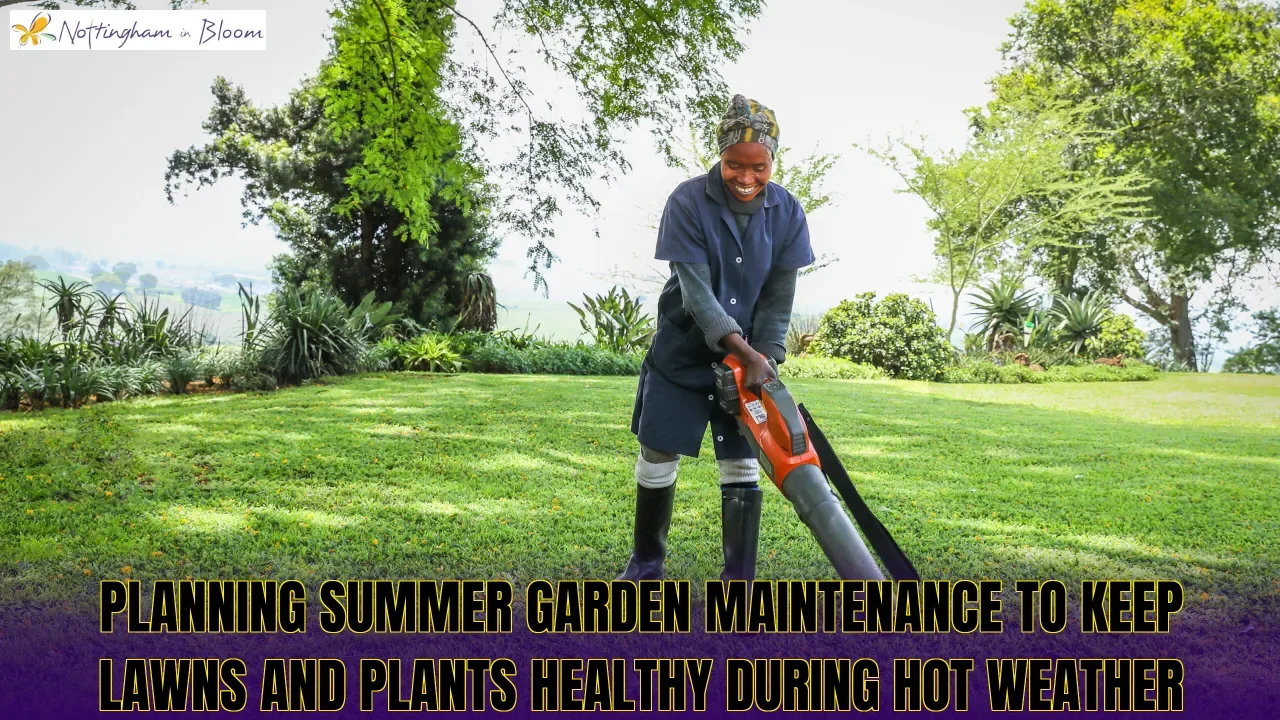
Thoughtful summer garden maintenance starts with a clear plan that reflects Nottingham’s warming, less predictable summers. Heatwaves, short intense downpours and longer dry spells all demand different responses. By mapping your space, tracking sunlight and setting priorities, you can target your time and budget where they matter most.
Assessing your garden’s microclimate
Before you change anything, observe how sun, shade and wind move across your plot in June, July and August. Walls and fences create heat traps, while tall trees cast deep shade that affects plant choice and watering needs. Note any low spots where water collects after heavy rain. This information underpins resilient summer garden maintenance and stops you wasting effort on plants in the wrong place.
Choosing resilient plants for hot spells
Selecting drought‑tolerant and heat‑resilient species makes every other task easier. Look for deep‑rooted perennials, ornamental grasses and pollinator‑friendly flowers like echinacea, sedum and salvia. In Nottingham, mixed borders with at least 30% drought‑tolerant plants cope far better with dry Junes. This approach reduces watering frequency and supports the environmental goals promoted by Nottingham in bloom.
Creating a simple seasonal task calendar
A written or digital calendar keeps key tasks visible and prevents last‑minute panic before heatwaves. Break jobs into weekly, monthly and one‑off actions such as mulching, pruning and feeding. Link your reminders to local weather forecasts and daylight hours. With this structure, summer garden maintenance becomes a manageable routine rather than a rush when plants already show stress.
Summer garden maintenance for water, soil and lawns
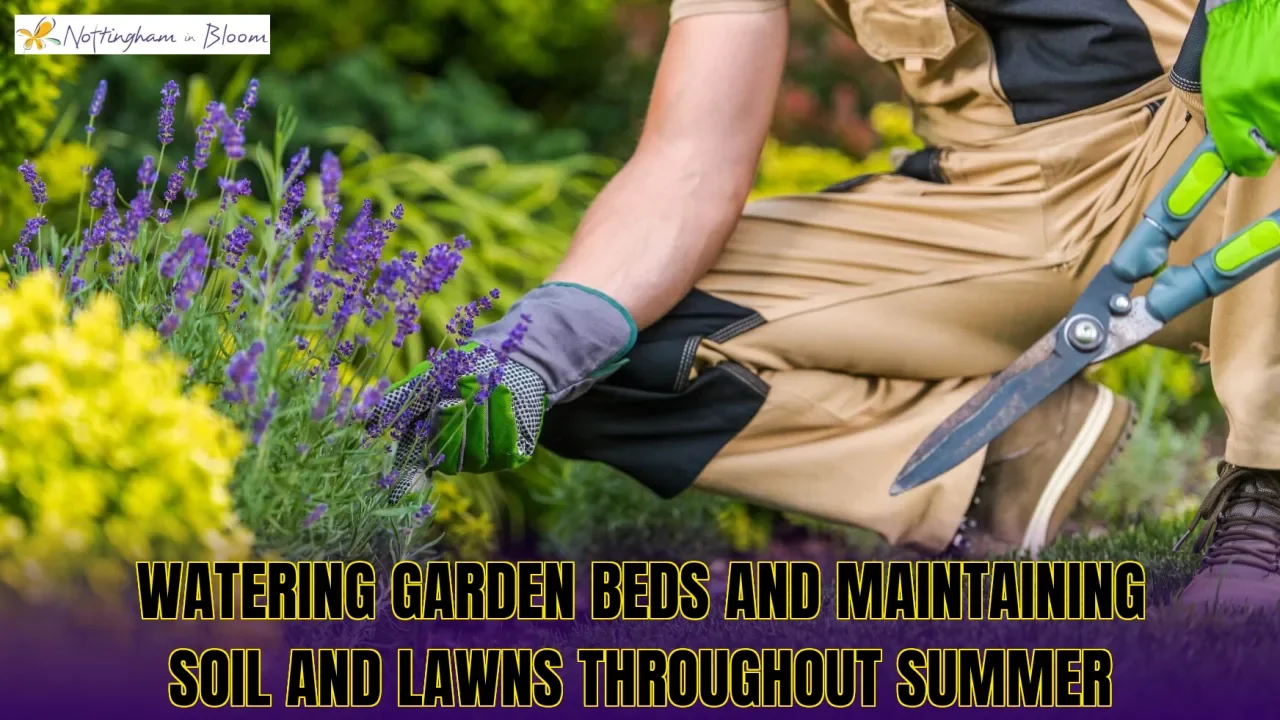
Efficient use of water and good soil structure are the foundations of healthy gardens in hot summers. Lawns, borders and containers each have different needs, but the principles of deep watering, mulching and careful feeding are the same. This section outlines practical techniques that suit both small urban plots and larger community gardens.
Water‑wise irrigation and rain capture
Install at least one water butt to capture roof runoff; a 200‑litre barrel can fill from a single heavy shower. Use this stored water for containers and new plantings whenever possible. For beds, water early morning or late evening, aiming for occasional deep soakings rather than daily light sprinkling. These habits make summer garden maintenance more sustainable and keep roots growing downwards, where soil stays cooler and wetter.
Building healthier soil with organic mulches
Apply a 5–7 cm layer of organic mulch such as composted bark, leaf mould or well‑rotted garden compost around shrubs and perennials. Mulch can reduce evaporation from the soil surface by up to 70% during hot weeks. Over time it improves structure, supports soil life and cuts back weed growth. This single step transforms summer garden maintenance by reducing both watering and weeding.
Keeping lawns green without wasting resources
Raise mower blades to 6–8 cm during high summer so grass shades its own roots. Leave short clippings on the lawn to recycle nutrients unless disease is present. In extended dry spells, allow grass to go naturally brown and dormant rather than over‑watering. With cooler, wetter weather it will usually recover, aligning with the resource‑saving ethos of Nottingham in bloom.
| Task | Best timing (Nottingham) | Key benefit in hot weather |
|---|---|---|
| Deep watering of borders | Every 5–7 days, early morning | Encourages deep roots and reduces stress |
| Mulching perennials | Late spring to early summer | Cuts evaporation and suppresses weeds |
| Raising mower height | From late May onwards | Protects lawn roots from heat and drought |
| Checking irrigation systems | Monthly, June to August | Prevents leaks and water waste |
Summer garden maintenance that supports wildlife
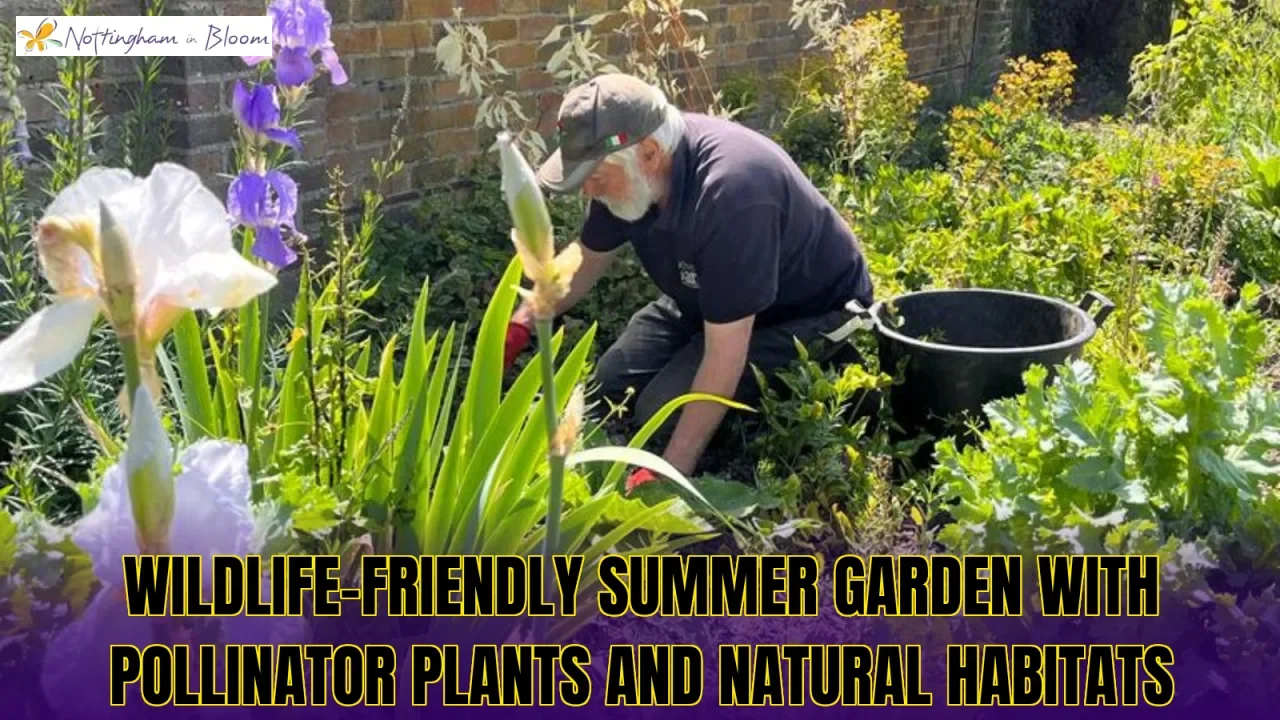
Modern summer garden maintenance is not only about neat borders; it also protects biodiversity in streets, parks and back gardens. Pollinators, birds and beneficial insects all struggle in heatwaves when water and nectar run short. By adapting a few routines, you can turn your space into a small but powerful refuge.
Providing water and shade for birds and insects
Place shallow dishes of clean water at different heights and refresh them daily in hot weather. Add a few pebbles so bees and hoverflies can land safely. Leave some dense shrubs or climbers untrimmed to provide cool, shaded refuges. These simple acts fit easily into summer garden maintenance schedules for even the busiest households.
Planting for continuous nectar and pollen
Aim for overlapping flowering periods from June through September, mixing native and ornamental species. Good options include verbena bonariensis, lavender, single dahlias and scabious, which all thrive in Nottingham’s conditions. This diversity ensures bees and butterflies find food even during dry spells. It also supports the community planting schemes championed by Nottingham in bloom.
Reducing chemical inputs and working with nature
Limit pesticide use, especially during daylight hours when pollinators are active. Instead, encourage natural predators by including log piles, small ponds and mixed hedges. Monitor pests weekly and tolerate minor damage rather than reaching for quick chemical fixes. Over a season, this approach makes summer garden maintenance safer for children, pets and wildlife alike.
Community projects and shared summer garden maintenance
Many of Nottingham’s most vibrant displays are the result of teamwork in schools, allotments and neighbourhood groups. Shared summer garden maintenance spreads the workload and builds skills, while also improving local air quality and wellbeing. With clear agreements and simple tools, even small teams can manage ambitious planting schemes.
Organising volunteers and simple task sharing
Start with a basic rota that covers watering, litter picking and light pruning during peak summer weeks. Match tasks to people’s time and physical ability, and keep instructions clear and visible on noticeboards or group chats. This structure reduces burnout and keeps standards high, reflecting the coordinated approach promoted by Nottingham in bloom.
Choosing low‑maintenance designs for public spaces
For community beds and planters, favour robust perennials, shrubs and long‑flowering species over thirsty bedding plants. Use dense groundcovers to shade soil and reduce weeding. Incorporate automatic drip irrigation where budgets allow, as it stabilises growth during holidays. Thoughtful design makes ongoing summer garden maintenance realistic for volunteer teams.
Measuring impact on wellbeing and the local environment
Track simple indicators such as volunteer numbers, species diversity and public feedback. Short seasonal surveys and photo records help show how green spaces evolve over time. These insights support funding bids and demonstrate the wider value of tidy, wildlife‑friendly streets. They also highlight how coordinated summer garden maintenance can strengthen neighbourhood pride.
Conclusion
Effective summer garden maintenance blends smart planning, water‑wise techniques and wildlife‑friendly choices that suit your space and schedule. By applying these principles at home and in shared plots, you help create cooler, greener streets and more resilient neighbourhoods. Explore more seasonal ideas, local projects and practical resources with Nottingham in bloom to keep your garden thriving all year.
Discover our detailed autumn gardening guide for next‑season planning.