
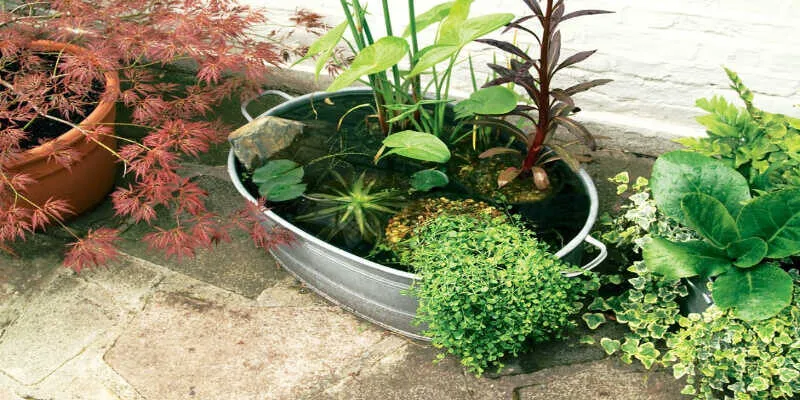
Best plants for a container pond allow urban residential growers to cultivate beautifully balanced miniature aquatic habitats within highly restricted outdoor balcony settings. Selecting appropriate flora combinations ensures stable oxygen production while continuously filtering out dissolved organic impurities completely naturally without expensive mechanical infrastructure.
Selecting optimal submerged flora for continuous water purification
Establishing pristine environmental conditions inside small patio vessels depends heavily on utilizing the correct varieties of underwater vegetation. These deep-water botanical species absorb surplus nutrients that invasive blanket weeds require to multiply rapidly over time.
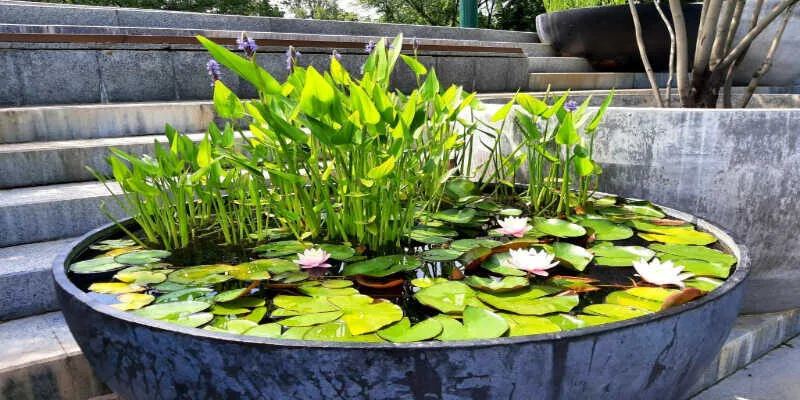
Hornwort provides superior oxygenation capabilities
Submerged hornwort remains one of the best plants for a container pond because it releases continuous streams of oxygen bubbles directly into lower water layers. This tough aquatic weed possesses no true root network, absorbing all necessary mineral nourishment entirely through its dense, needle-like foliage blocks. Incorporating this invisible botanical workhorse eliminates toxic gas accumulation, ensuring that tiny subterranean pond organisms survive changing seasonal conditions.
Water starwort thrives in cool seasonal microclimates
This delicate underwater perennial forms lush green emerald mats that offer excellent concealment for beneficial native pond life navigating shallow spaces. Horticultural experts rank water starwort among the best plants for a container pond due to its outstanding ability to adapt to unpredictable autumn temperature drops. The dense structure catches falling organic airborne dust particles before they sink and decay on the underlying container liner.
Willow moss anchors perfectly in narrow stone joints
This slow-growing native moss attaches itself firmly to submerged decorative rocks or gravel beds situated at the very base of your patio pool. Utilizing willow moss helps design the best plants for a container pond configuration by creating natural biological filtration carpets across smooth surfaces. This resilient plant traps microscopic suspended organic debris, maintaining crystal-clear water clarity without requiring continuous human physical intervention.
Incorporating floating vegetation to regulate intense summer heatwaves
Exposing limited water volumes to direct midday solar radiation frequently triggers dangerous temperature spikes that encourage toxic algae blooms.
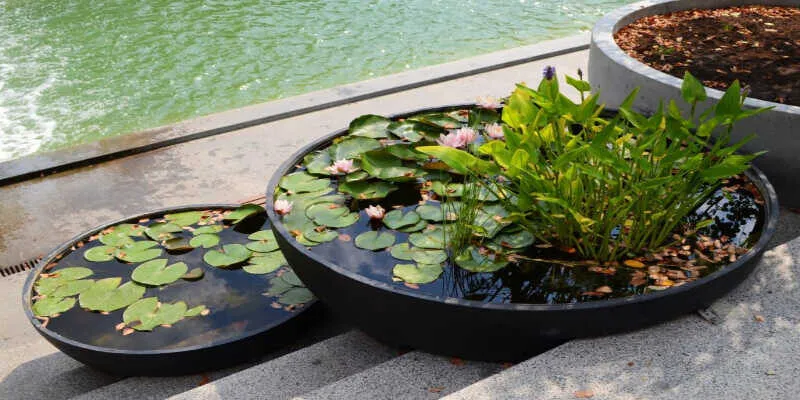
Miniature water lilies offer magnificent surface protection
Dwarf water lilies stand out as the best plants for a container pond surface because their broad circular pads block excess sunlight efficiently. These gorgeous floating flora require minimal deep soil anchoring, spreading their protective leaves evenly across the liquid film within a few weeks. Their vibrant summer blossoms introduce striking visual focal points that draw helpful wild pollinators straight to your patio boundaries.
Water soldiers provide dynamic structural variations
This fascinating native perennial floats freely beneath the surface layer during spring before rising dramatically to produce striking spiky fans in summer. Integrating water soldiers into your selection of the best plants for a container pond establishes multi-dimensional depth variations within narrow circular tubs. The serrated green leaves consume massive quantities of dissolved nitrogen, starving out common pond pests completely naturally.
Frogbit creates delicate trailing root networks
Producing small heart-shaped leaves that mirror miniature water lilies, frogbit provides exceptional surface coverage without overwhelming modest container dimensions. This dainty species ranks highly among the best plants for a container pond because its long feathery roots hang directly into open water. These hanging root systems absorb dissolved toxic elements, creating ideal spawning zones for helpful local pond snails.
Utilizing vertical marginal rushes to enhance architectural landscape dimensions
Shallow perimeter shelving layers allow home growers to incorporate elegant wetland species that soften rigid structural container lines. These moisture-loving plants break up visual monotony by adding dramatic multi-dimensional height layers to compact patio layouts.
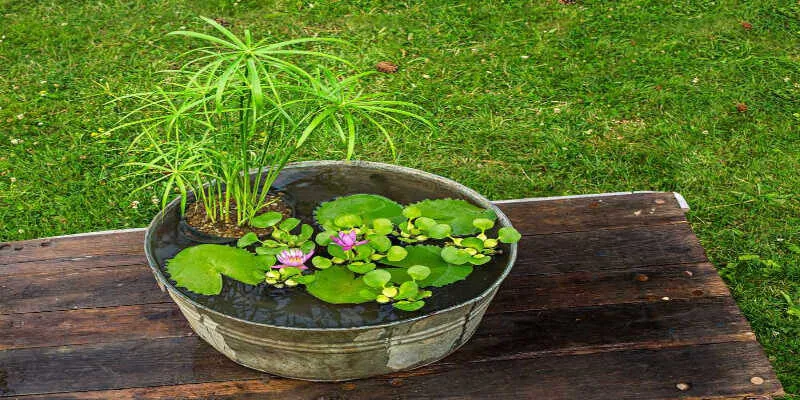
Lesser spearwort delivers vibrant golden summer color
This low-growing perennial buttercup flourishes beautifully when positioned in shallow water zones measuring less than ten centimeters deep. Choosing lesser spearwort allows you to enjoy the best plants for a container pond that produce continuous golden blossoms from June through September. The robust creeping stems bind shallow perimeter gravel layers together, preventing small decorative stones from slipping down.
Water forget me not forms beautiful floral borders
Featuring delicate clusters of sky-blue blossoms, this spreading wetland plant scrambles gracefully over the exposed edges of industrial stone tubs. Incorporating this traditional favorite provides you with the best plants for a container pond to mask ugly plastic pond liner rims completely. The dense clusters of tiny leaves offer secure foraging platforms for beneficial insects like ladybirds and hoverflies.
Zebra rush introduces striking modern geometric patterns
This elegant ornamental reed features eye-catching horizontal bands of bright cream and rich green across its tall cylindrical stems. Gardeners seeking the best plants for a container pond to complement contemporary urban architecture frequently favor this highly architectural specimen. The upright spears withstand intense winter wind gusts without snapping, maintaining excellent structure across different seasons.
Exploring technical placement blueprints to optimize miniature pond health
Achieving lasting ecological success with the best plants for a container pond demands a clear understanding of depth requirements and pot stabilization methods.
Utilizing specialized plastic mesh aquatic baskets
Planting your chosen wetland flora into perforated plastic containers prevents roots from spreading uncontrollably across the limited internal basin. Filling these baskets with heavy, nutrient-poor heavy clay soil ensures that the best plants for a container pond extract minerals from water rather than rich compost. Capping the exposed earth with washed river gravel stops curious birds from uprooting delicate specimens.
Arranging internal brick supports for multi level shelving
Stacking clean, non-toxic clay bricks inside deep barrels allows amateur builders to construct custom subterranean shelves for varied marginal species. This simple modification ensures that you can accommodate the best plants for a container pond that require distinct moisture levels to flourish. Creating these step-like elevations maximizes usable horizontal space while providing excellent hiding crevices for local amphibians.
Maintaining optimal plant density ratios across seasons
Covering approximately fifty percent of the total water surface with floating foliage establishes the perfect biological balance between light and shade. Pruning overgrown marginal reeds regularly prevents decaying organic material from contaminating the limited water volume during autumn leaf drops. Following these easy spacing rules keeps your selected best plants for a container pond healthy and incredibly beautiful year after year.
Conclusion
The best plants for a container pond empower modern urban homeowners to transform ordinary restricted patios into highly productive, self-sustaining biological sanctuaries. By combining oxygenating hornwort, shading water lilies, and architectural marginal rushes, citizens create vital ecological havens that support threatened regional wildlife populations. Nurturing these miniature aquatic landscapes allows every resident to drive meaningful environmental conservation progress, beautifully preserving the green legacy of Nottingham In Bloom.